


Upnp Port Mapping Program

Universal Plug and Play - Wikipedia, the free encyclopedia. Universal Plug and Play (UPn. P) is a set of networking protocols that permits networked devices, such as personal computers, printers, Internet gateways, Wi- Fi access points and mobile devices to seamlessly discover each other's presence on the network and establish functional network services for data sharing, communications, and entertainment. UPn. P is intended primarily for residential networks without enterprise- class devices. The UPn. P technology was promoted by the UPn. P Forum, a computer industry initiative to enable simple and robust connectivity to stand- alone devices and personal computers from many different vendors. The Forum consisted of over eight hundred vendors involved in everything from consumer electronics to network computing.
Since 2. 01. 6, all UPn. P efforts are now managed by the Open Connectivity Foundation (OCF). Device search requests and advertisements are supported by running HTTP on top of UDP (port 1. HTTPMU). Responses to search requests are also sent over UDP, but are instead sent using unicast (known as HTTPU).
Conceptually, UPn. P extends plug and play. It is a distributed, open architecture protocol based on established standards such as the Internet Protocol Suite (TCP/IP), HTTP, XML, and SOAP. UPn. P control points (CPs) are devices which use UPn. P protocols to control UPn. P controlled devices (CDs). A UPn. P compatible device from any vendor can dynamically join a network, obtain an IP address, announce its name, advertise or convey its capabilities upon request, and learn about the presence and capabilities of other devices.
Dynamic Host Configuration Protocol (DHCP) and Domain Name System (DNS) servers are optional and are only used if they are available on the network. Devices can disconnect from the network automatically without leaving state information. UPn. P was published as a 7. ISO/IEC 2. 93. 41, in December, 2. No special device driver support is necessary; common network protocols are used instead. User interface (UI) Control. Optionally, the UPn.
P architecture enables devices to present a user interface through a web browser (see Presentation below). Operating system and programming language independence.
Any operating system and any programming language can be used to build UPn. P products. UPn. P stacks are available for most platforms and operating systems in both closed and open source forms. Extensibility. Each UPn. P product can have device- specific services layered on top of the basic architecture.
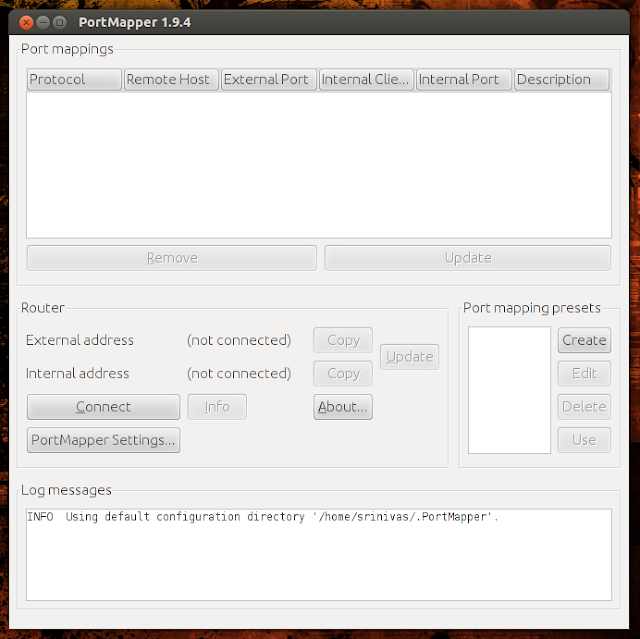
TCP and UDP Port Number Well-known ports Port TCP UDP Description Status 0 UDP Reserved Official 1 TCP UDP TCP Port Service Multiplexer (TCPMUX) Official 2 TCP UDP CompressNET The UPnP PortMapper is an easy to use program that manages the port mappings (port forwarding) of a UPnP enabled internet gateway device (router) in the local network. You can easily view, add and remove port mappings. Universal Plug and Play (UPnP) is a set of networking protocols that permits networked devices, such as personal computers, printers, Internet gateways, Wi-Fi access points and mobile devices to seamlessly discover each other. UPnP Client Support Architecture. Much of what we need to implement UPnP on Windows is available through the standard protocol stacks and components like TCP/IP and HTTP. On top of these components, support for the protocols.
View and Download ZyXEL Communications ZyWALL 2 Plus user manual online. ZyXEL Communications ZyWALL User's Guide. ZyWALL 2 Plus Network Card pdf manual download. Top lista - Najbolji programi za skidanje torrenta. Predstavljamo najpopularnije besplatne programa za skidanje torrenta, odnosno za preuzimanje sadr
In addition to combining services defined by UPn. P Forum in various ways, vendors can define their own device and service types, and can extend standard devices and services with vendor- defined actions, state variables, data structure elements, and variable values. Protocol. It assumes the network must run Internet Protocol (IP) and then leverages HTTP, SOAP and XML on top of IP, in order to provide device/service description, actions, data transfer and eventing. Device search requests and advertisements are supported by running HTTP on top of UDP using multicast (known as HTTPMU).
Responses to search requests are also sent over UDP, but are instead sent using unicast (known as HTTPU). UPn. P uses UDP due to its lower overhead in not requiring confirmation of received data and retransmission of corrupt packets.
HTTPU and HTTPMU were initially submitted as an Internet Draft but it expired in 2. Each device must implement a DHCP client and search for a DHCP server when the device is first connected to the network. If no DHCP server is available, the device must assign itself an address. The process by which a UPn. P device assigns itself an address is known within the UPn. P Device Architecture as Auto. IP. In UPn. P Device Architecture Version 1.
The UPn. P discovery protocol is known as the Simple Service Discovery Protocol (SSDP). When a device is added to the network, SSDP allows that device to advertise its services to control points on the network.
This is achieved by sending SSDP alive messages. When a control point is added to the network, SSDP allows that control point to actively search for devices of interest on the network or listen passively to the SSDP alive messages of device. The fundamental exchange is a discovery message containing a few essential specifics about the device or one of its services, for example, its type, identifier, and a pointer (network location) to more detailed information.
Description. For the control point to learn more about the device and its capabilities, or to interact with the device, the control point must retrieve the device's description from the location (URL) provided by the device in the discovery message. The UPn. P Device Description is expressed in XML and includes vendor- specific manufacturer information like the model name and number, serial number, manufacturer name, (presentation) URLs to vendor- specific web sites, etc. The description also includes a list of any embedded services. For each service, the Device Description document lists the URLs for control, eventing and service description. Each service description includes a list of the commands, or actions, to which the service responds, and parameters, or arguments, for each action; the description for a service also includes a list of variables; these variables model the state of the service at run time, and are described in terms of their data type, range, and event characteristics. Control. To do this, a control point sends a suitable control message to the control URL for the service (provided in the device description).
Control messages are also expressed in XML using the Simple Object Access Protocol (SOAP). Much like function calls, the service returns any action- specific values in response to the control message. The effects of the action, if any, are modeled by changes in the variables that describe the run- time state of the service. Event notification. The event notification protocol defined in the UPn.
P Device Architecture is known as General Event Notification Architecture (GENA). A UPn. P description for a service includes a list of actions the service responds to and a list of variables that model the state of the service at run time. The service publishes updates when these variables change, and a control point may subscribe to receive this information. The service publishes updates by sending event messages.
Event messages contain the names of one or more state variables and the current value of those variables. These messages are also expressed in XML. A special initial event message is sent when a control point first subscribes; this event message contains the names and values for all evented variables and allows the subscriber to initialize its model of the state of the service. To support scenarios with multiple control points, eventing is designed to keep all control points equally informed about the effects of any action. Therefore, all subscribers are sent all event messages, subscribers receive event messages for all . If a device has a URL for presentation, then the control point can retrieve a page from this URL, load the page into a web browser, and depending on the capabilities of the page, allow a user to control the device and/or view device status. The degree to which each of these can be accomplished depends on the specific capabilities of the presentation page and device.
UPn. P AV standards. The UPn. P AV architecture allows devices to support different types of formats for the entertainment content, including MPEG2, MPEG4, JPEG, MP3, Windows Media Audio (WMA), bitmaps (BMP), and NTSC, PAL or ATSC formats. Multiple types of transfer protocols are supported, including IEEE 1. HTTP, RTP and TCP/IP. These enhancements are created by adding capabilities to the Media. Server and Media.
Renderer device classes, allowing a higher level of interoperability between products made by different manufacturers. Some of the early devices complying with these standards were marketed by Philips under the Streamium brand name. Since 2. 00. 6, versions 3 and 4 of the UPn.
P audio and video device control protocols have been published. It is a computer system or a similar digital appliance that stores digital media, such as photographs, movies, or music and shares these with other devices. UPn. P AV media servers provide a service to UPn. P AV client devices, so called control points, for browsing the media content of the server and request the media server to deliver a file to the control point for playback. UPn. P media servers are available for most operating systems and many hardware platforms.
UPn. P AV media servers can either be categorized as software- based or hardware- based. Software- based UPn. P AV media servers can be run on a PC.
Hardware- based UPn. P AV media servers may run on any NAS devices or any specific hardware for delivering media, such as a DVR. As of May 2. 00. 8, there were more software- based UPn. P AV media servers than there were hardware- based servers.
Other components. Qo. S (Quality of Service) refers to control mechanisms that can provide different priority to different users or data flows, or guarantee a certain level of performance to a data flow in accordance with requests from the application program. Since UPn. P AV is mostly to deliver streaming media that is often near real- time or real- time audio/video data which it is critical to be delivered within a specific time or the stream is interrupted. Qo. S (Quality of Service) guarantees are especially important if the network capacity is limited, for example public networks, like the internet. With classes such as; Traffic Class that indicates the kind of traffic in the traffic stream, (for example, audio or video). Traffic Identifier (TID) which identifies data packets as belonging to a unique traffic stream.


/https%3A%2F%2Fassets.over-blog.com%2Ft%2Fcedistic%2Fcamera.png)